 |
Hope for a fossil-free future emerges as 50+ countries meet in ColombiaEarthBeat Weekly May 1, 2026
 Stientje van Veldhoven, minister of Climate Policy and Green Growth of the Netherlands, right, embraces Colombia's Environmental Minister Irene Vélez Torres during a conference aimed at transitioning away from fossil fuels, on April 28, 2026, in Santa Marta, Colombia. (AP/Ivan Valencia) Stientje van Veldhoven, minister of Climate Policy and Green Growth of the Netherlands, right, embraces Colombia's Environmental Minister Irene Vélez Torres during a conference aimed at transitioning away from fossil fuels, on April 28, 2026, in Santa Marta, Colombia. (AP/Ivan Valencia)As wars and international conflicts have thrown global oil markets into historically turbulent waters, 57 countries descended this week upon the Caribbean coastal city of Santa Marta, Colombia, to talk about how to move the world from its dependency on fossil fuels. The first Conference on Transitioning Away from Fossil Fuels took place April 24-29, with countries meeting the last two days for high-level meetings. Among those invited was the Holy See, who sent two representatives as observers. Present in adjacent meetings and discussions around Santa Marta — a historical coal port for Colombia, which co-hosted the conference with the Netherlands — were officials with two dozen Catholic organizations. What they saw and heard had them feeling quite hopeful, as I reported this week at EarthBeat. "The mood is amazing," Lisa Sullivan, senior program officer on integral ecology for the Maryknoll Office for Global Concerns, told me during the conference's early days. "There's a tremendous amount of hope." That sense of optimism that I heard from several Catholics was a contrast to the tenor that has defined in recent years the United Nations climate change conferences, where discussions like those held in Santa Marta get quickly tied down in debates about whether to transition from fossil fuels, rather than how to do it. U.N. rules that require consensus also mean that any single nation can quickly halt a proposal. The countries gathered in Colombia represented what organizers termed a "coalition of the willing," all of which have expressed a desire to move from coal, oil and gas to renewable energy sources. (Those opposed, like the U.S. and China, were not asked to attend.) Together, they represented one-fifth of global fossil fuel production — among them, Australia, Brazil, Canada, France, Germany, Nigeria and the United Kingdom — so it wasn't just countries with little economic stakes at risk. Organizers made clear the conference was a first step toward a first formal conversation and that any outcomes would be limited to a summary report, a new scientific panel and plans to convene again next year. While the topic of a proposed international treaty to phase out fossil fuels was a subject, the conference was not expected to serve as a negotiating space for such a document. Still, the fact that governments met to actively discuss strategies to responsibly, yet rapidly, shift the world economy from fossil fuels was a strong sign of optimism worth acknowledging, Catholic officials told me. "The Santa Marta Conference is a moral turning point," Yeb Saño, board chair of the Laudato Si' Movement, said in a statement. "As people of faith, we cannot remain neutral while the continued expansion of fossil fuels deepens the suffering of the poor, harms vulnerable communities, and endangers our common home. This is the moment to turn our faith into action, to stand with those most affected, and to help build a future rooted in justice, peace, and care for creation." Watch for more coverage of the Santa Marta conference next week at EarthBeat and National Catholic Reporter. Read more: An end to the fossil fuel era? Catholic groups hopeful as nations meet in Colombia
What else is new on EarthBeat:
 by Kate Scanlon, OSV News An Indigenous coalition filed an updated lawsuit in federal district court in Phoenix on April 22, their latest attempt to block a land transfer including their sacred site at Oak Flat, Arizona, and protect the site from destruction by a copper mining giant.
 by Gina Christian, OSV News As the U.S. and Iran face off over the Strait of Hormuz, Catholic maritime ministry leaders are calling for prayer and support for the thousands of souls trapped at sea amid the war.
 by Chris Herlinger While reporting in Indonesia, international correspondent Chris Herlinger finds sisters responding to natural disasters, poverty and women's issues, all on one small island.
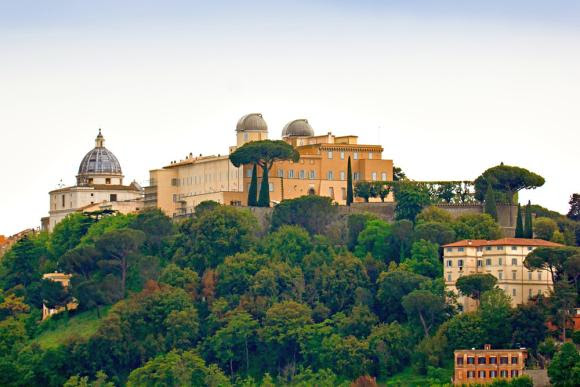 by Gina Christian, OSV News The Vatican Observatory announced in an April 29 press release that an asteroid has been named in honor of Pope Leo XIII, who formally reestablished the observatory in 1891.
 by Pierre Eau Claire If you've never experienced the mystery of a resurrection, buy a package of seeds and plant them in some fertile soil.
 by Jeromiah Taylor NCR staff reporter Camillo Barone and Brian Roewe, NCR's environment correspondent honored by professional journalism organization. What's happening in other climate news: |
Friday, May 1, 2026
EarthBeat Weekly: Hope for a fossil-free future emerges in Colombia


Subscribe to:
Post Comments (Atom)
WCC NEWS: Season of Creation closing event will prayerfully consider “Living Water”
A Season of Creation closing event on 4 October will prayerfully consider this year’s theme, "Living Water" (Ezekiel 47:9, 12): ...

-
 The World Council of Churches (WCC) and Canadian Council of Churches will host a webinar panel discussion, entitled “Counting the Ecological...
 -
 View this email in your browser By Betsy Shirley Editor in Chief, Sojourners We’ve got an unofficial Mary Oliver fan club here at Sojourners...
 -
 Three Ways We Can Respond Faithfully to Climate Change Caring for creation is more than a responsibility. It is a faithful act , inseparable...
No comments:
Post a Comment